Aussie + Poodle = AussieDoodle
It is not a mystery why Poodles are mixed with everything, their curly hair is not only beautiful, but also low or no shed. Below are some of the main upsides of each breed, and what we are trying to achieve with our mix. Below that is more involved information which might be more than you even wanted to know…

- Very Athletic (Herding Breed)
- Very Intelligent
- Human Focused
- Wide Variety of Coloration
- Working Personality
- Healthy
- Double Coated Dog (no professional grooming)
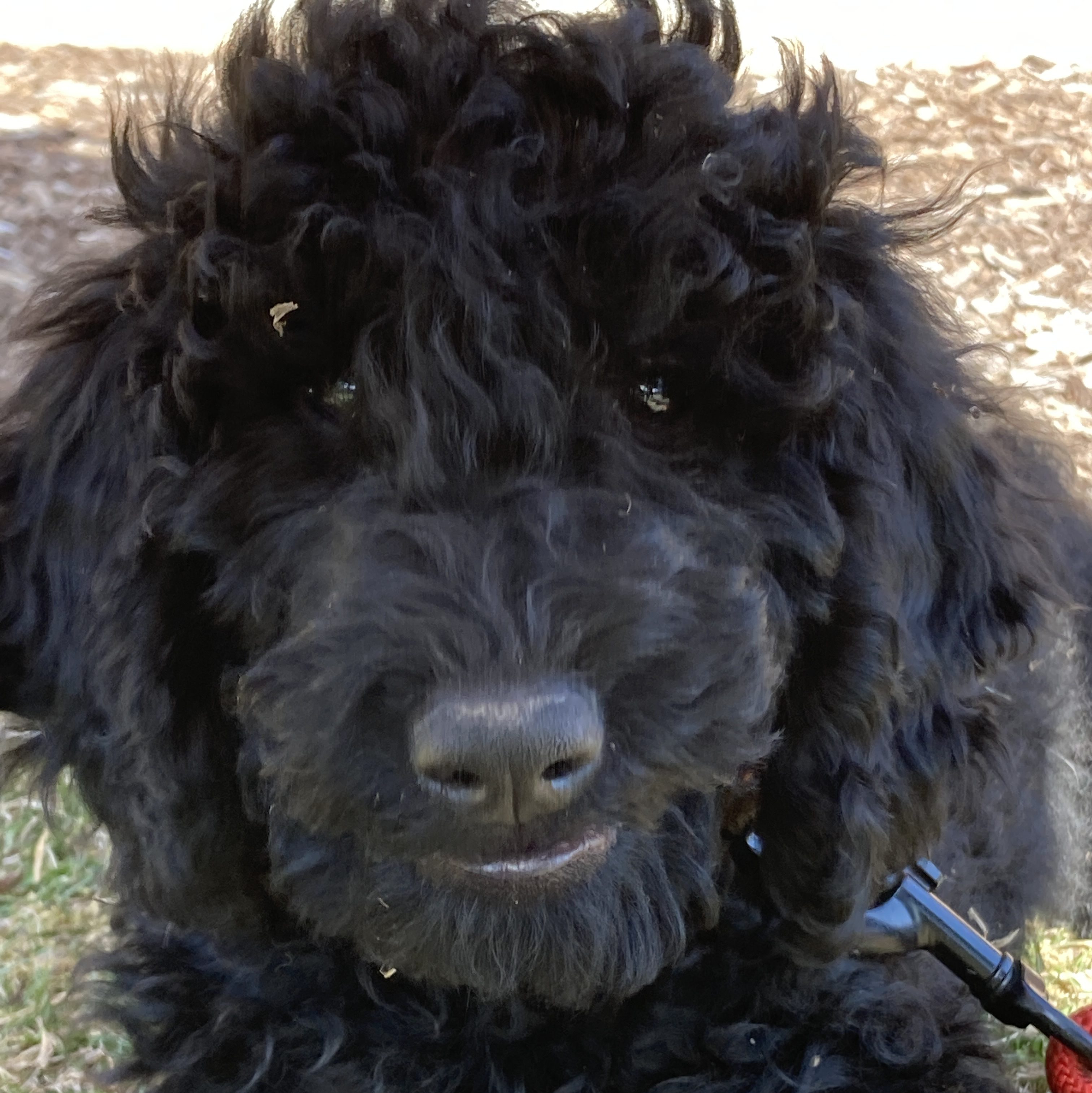
- Lean Athletic Build
- Intelligent
- Human Focused
- Wide Variety of Coloration
- Pet personality
- Healthy
- Curly Hair (no shed, requires grooming)
Why AussieDoodles?
Somewhere in the middle of all of these traits, there is a dog to fit into any family. We personally love the Australian Shepherd above all breeds, but recognize that sometimes it could be a bit of an acquired taste. While both Aussies and Poodles have potential drawbacks, in the mix of them we mitigate for most of those and should end up with a dog that is the happy in between. For example, Aussies have a reputation for really intense personalities, and Poodles can at times be hard to motivate, in the mix we should find our dogs to be more mellow than some Aussies and more motivated than some Poodles. On top of that? The colorations and fur texture variety is fantastic.
What about Doodle Generations?
Our puppies are F1 generation doodles. Which means a full blooded Aussie is bred to a full blooded poodle. There are pro’s and con’s to F1’s vs, F2’s, F1b’s, etc.. but we want the variety that comes with F1’s. The truth is, most doodles are 85% or more poodle, to guarantee the poodle fur, and while we understand the rationale, we want the Australian Shepherd to come through in the puppies (50% Aussie and 50% Poodle). For the foreseeable future, F1’s are the Fetching Puppies Co. puppy of choice, it will yield puppies with a wide variety of characteristics, which means some will take more after a Poodle, and some will take more after the Aussie.
Fur vs. Hair- Hypo-Allergenic?
No Dog will ever be truly Hypo-Allergenic. All dogs produce oils, dander and hair/fur which can elicit an allergic response in humans. What people generally mean, is low or no-shed, which while not truly “hypo-allergenic” does often manage to restrict the spread of allergens in enclosed spaces. This is 100% a marketing ploy that America has bought into, and as you are aware, it has worked. While we breed poodle mixes, which, in theory should be low or no-shed dogs, it is important to know that someone, somewhere is most likely allergic to your dog.
To Shed or Not To Shed
An Australian Shepherd has a double coat (Guard Hairs (most of the color you see) and Undercoat (shorter fluffy wavy hair)), this coat is common amongst herding breeds and is renowned for its ability to protect the dog, to be low oil (smell and texture), and for its over all luster and appearance, however, they do shed…twice a year they generally shed very heavily.
Poodles on the other hand, have hair, very much like human hair. It grows constantly and produces much more of its own oils. It is not good at protecting the dog from the weather and requires very consistent grooming to not become impossibly matted. It however does not shed, and this is the singular trait has caused Doodles’s popularity to skyrocket.
Every family chooses which issue they deal with (Shedding or Grooming), and neither is cheap or easy. In our house, we prefer shedding to grooming, however, when we cut our poodles to a “doodle cut” we find the appearance to be very enjoyable, and functional, providing they never come into contact with any burs. Australian Shepherds were bred to be impervious to the weather, Poodles have been bred to live in town. We do not suggest attempting to take your doodle upland fowl hunting.
Fetching Puppies Co. Puppies will be a grab-bag of these fur styles, either one or the other or somewhere in between. We cannot guarantee any fur texture in particular, and each dog’s appearance will be unique.
 Fetching Puppies Co.